
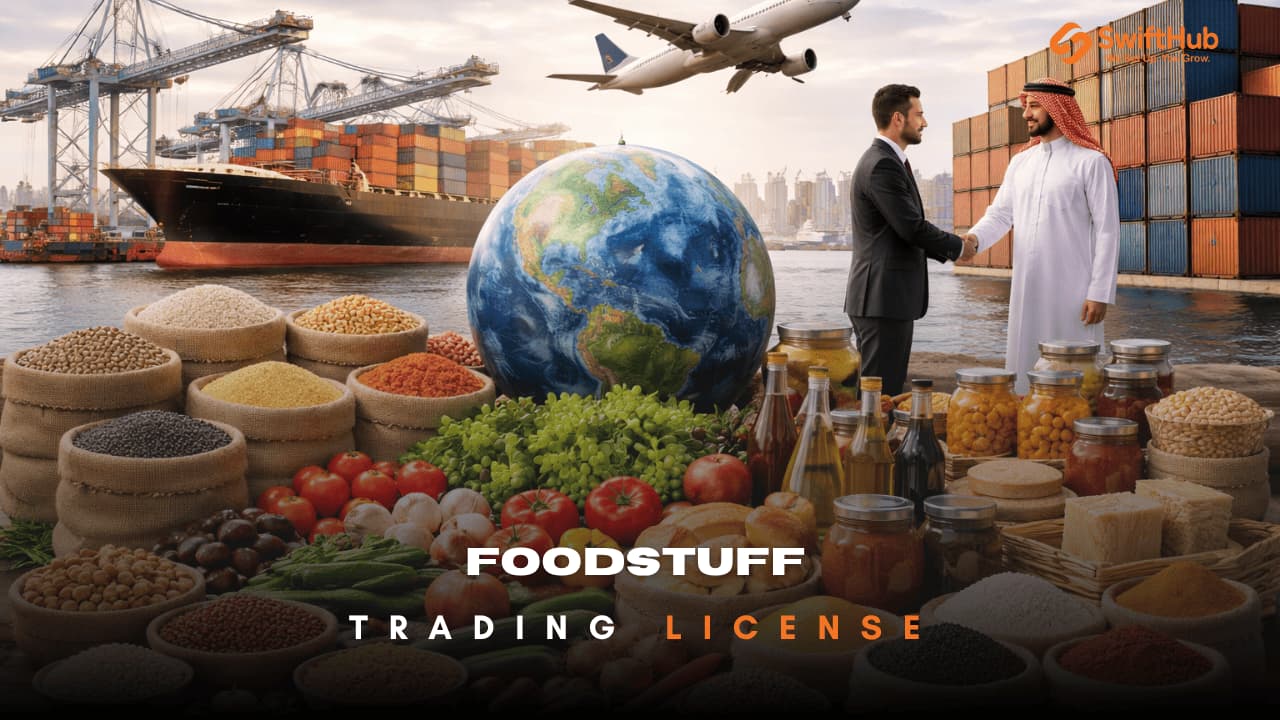
Dubai has become a regional hub for food import, distribution, and wholesale trading. With a fast-growing population and strong hospitality sector, the demand for food suppliers, distributors, and importers continues to expand every year.
However, starting a food distribution business requires obtaining a Foodstuff Trading License in Dubai, along with regulatory approvals related to food safety, product registration, and import compliance.
Under the current Dubai regulatory framework, food trading companies must obtain a commercial license from the Dubai Department of Economy and Tourism and comply with food control regulations enforced by Dubai Municipality.
From our experience working with entrepreneurs entering the UAE food supply chain, many investors underestimate the compliance layer involved—especially when importing or distributing food products to restaurants, supermarkets, and grocery stores.
This guide explains the foodstuff trading license in Dubai, including costs, licensing steps, regulatory approvals, and the key requirements businesses must meet under current 2026 regulations.
Important note:Food trading companies that import or distribute food products must register their items through the **Dubai Municipality Food Import & Re-Export System (FIRS)** before selling them in the UAE market.
Official regulatory reference: https://www.det.gov.aehttps://www.dm.gov.ae
What Is a Foodstuff Trading License in Dubai?
A Foodstuff Trading License in Dubai is a commercial license that allows businesses to **import, export, distribute, and wholesale food products** within the UAE market.
The license is issued by the Dubai Department of Economy and Tourism under the commercial trading activity category.
Companies holding this license can legally conduct activities such as:
- importing packaged food products
- distributing food supplies to restaurants
- supplying supermarkets and grocery stores
- exporting food products internationally
- operating food wholesale businesses
Under Dubai’s food safety regulations, businesses handling food products must also comply with the standards monitored by Dubai Municipality.
These regulations ensure:
- food traceability
- safe storage conditions
- proper labeling and packaging
- compliance with UAE food import standards
Compliance Tip:If your business plans to import food products into Dubai, every item must be registered through the Dubai Municipality Food Import System before it can be cleared at UAE ports.
Entrepreneurs entering the UAE food sector often combine food trading activities with other business models such as restaurants or grocery retail.
Read this guide: How to Start a Food Business in Dubai
Foodstuff Trading License Cost in Dubai – Full Breakdown
The foodstuff trading license cost in Dubai depends on several factors including the company structure, number of business activities, and office space requirements.
Under the current licensing structure used by the Dubai Department of Economy and Tourism, the basic licensing fees generally fall within the following range.
Estimated Cost Breakdown
| Cost Component | Estimated Cost (AED) |
| Trade name reservation | 620 – 750 |
| Initial approval | 120 – 500 |
| Foodstuff trading license fee | 10,000 – 15,000 |
| Chamber of Commerce registration | 1,200 – 2,000 |
| Office Ejari registration | 1,000 – 3,000 |
Estimated total license cost:AED 13,000 – AED 20,000
Important Note:This estimate reflects government licensing fees only. Additional costs may apply for office space, product registration, import approvals, and staff visas.
For example, food trading businesses supplying retail shops or supermarkets may also need warehouse storage facilities that comply with municipality food storage requirements.
If your plan includes selling food products directly to customers, you may also consider opening a retail outlet.
Read: Grocery License Cost in Dubai
Step-by-Step Process to Get a Foodstuff Trading License in Dubai
Obtaining a foodstuff trading license in Dubai involves a structured approval process regulated by multiple government authorities.
Below is the typical licensing procedure based on the current approval framework.
1. Select the Food Trading Business Activity
The first step is selecting the correct commercial activity classification under Dubai’s economic licensing system.
Examples of food trading activities include:
- foodstuff trading
- food import and export
- wholesale food supply
- packaged food distribution
Choosing the correct activity ensures the company can legally import and distribute food products within the UAE.
2. Reserve a Trade Name
The company must register a trade name through the Dubai Department of Economy and Tourism.
Dubai trade name regulations require that the name:
- does not duplicate an existing company name
- does not contain offensive language
- complies with UAE naming guidelines
Trade name approvals are usually processed within one working day.
3. Obtain Initial Business Approval
Initial approval confirms that the authorities have no objection to the proposed food trading business.
This allows investors to proceed with:
- office lease agreements
- company formation documentation
- licensing application submission
4. Secure Office Space and Ejari Registration
Food trading companies must operate from a registered commercial office.
The office lease must be registered through the Ejari tenancy system, which is mandatory before the trade license can be issued.
5. Complete Municipality Food Registration (If Required)
Businesses importing or distributing food products must register their products through the Dubai Municipality Food Import and Re-Export System.
This ensures the food products meet UAE safety and labeling regulations.
Important Compliance Tip:Importing food products without registering them in the municipality system may result in customs clearance delays or shipment rejection.
6. Receive the Foodstuff Trading License
After completing all documentation and approvals, the Dubai Department of Economy and Tourism issues the official Foodstuff Trading License.
Once the license is issued, the company can legally:
- import food products
- supply restaurants and grocery stores
- distribute food items across the UAE market
Many food trading companies eventually expand into restaurant supply chains or grocery distribution networks.
Read: How to Start a Restaurant in Dubai
Documents Required for a Foodstuff Trading License
To apply for a foodstuff trading license in Dubai, investors must submit several documents during the licensing process.
These documents allow authorities to verify the ownership structure and compliance eligibility of the business.
Required Documents
Typically required documents include:
- passport copy of shareholders
- UAE residence visa copy (if applicable)
- Emirates ID copy
- trade name reservation certificate
- initial approval certificate
- office lease agreement (Ejari)
- Memorandum of Association (MOA)
Additional documents may be required depending on the company structure or if foreign investors are involved.
Note:Companies importing food products may also need to register with Dubai Municipality’s food control system before starting operations.
Get a Customized Food Trading License Quote in Dubai
Starting a food trading company in Dubai can open significant opportunities within the UAE’s growing food supply chain and hospitality sector. However, navigating licensing requirements, municipality approvals, and product registration processes can be complex for first-time investors.
Working with experienced advisors helps ensure the business is structured correctly from the beginning.
At SwiftHub, our specialists assist entrepreneurs with the full foodstuff trading license setup process in Dubai, including:
- trade license registration
- trade name approval
- company formation documentation
- food import compliance guidance
- visa processing for staff
If you are planning to start a food trading company, our team can provide a customized cost estimate based on your business model, office requirements, and distribution plans.
Disclaimer:Food trading regulations, import compliance rules, and licensing fees may change depending on government updates issued by Dubai authorities. Investors should verify the latest requirements directly with official regulatory bodies before proceeding with a business setup.