
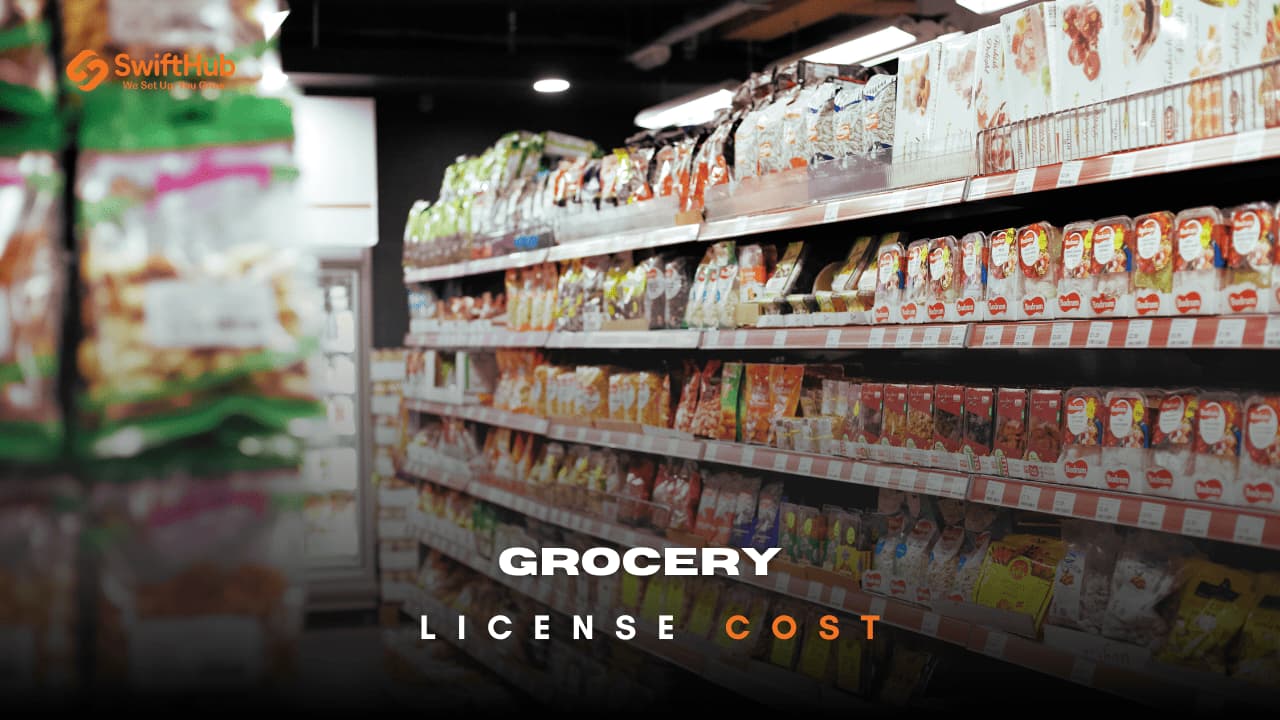
Starting a neighborhood grocery shop in Dubai can be one of the most stable retail businesses in the UAE. Daily consumer demand for food, beverages, and household essentials means grocery stores benefit from consistent foot traffic—especially in residential communities.
However, before opening a grocery store, investors must understand the grocery license cost in Dubai, the approvals required, and the operational expenses involved.
Under the current Dubai business licensing framework, grocery shops must obtain a commercial trade license issued by the Dubai Department of Economy and Tourism. If the store sells food products such as dairy, frozen goods, or packaged groceries, it must also comply with hygiene and food storage regulations monitored by Dubai Municipality.
From our experience advising retail entrepreneurs entering the UAE market, the actual investment to open a grocery shop is often higher than expected, mainly due to location costs, shop fit-out, and product inventory.
This guide provides a complete breakdown of grocery license costs in Dubai, the government approvals involved, and the real startup expenses investors should plan for.
Important Note:Grocery businesses in Dubai fall under the retail trading category, which means the store must comply with both commercial licensing rules and food safety regulations if food products are sold.
Official reference: https://www.det.gov.aehttps://www.dm.gov.ae
How Much Does a Grocery License Cost in Dubai?
The grocery license cost in Dubai typically ranges between AED 12,000 and AED 20,000 for the trade license alone. However, this fee only covers the basic government licensing charges required to legally register the business.
Once other mandatory requirements are included—such as shop rent, Ejari registration, municipality approvals, and store fit-out—the total grocery store setup cost in Dubai usually ranges between AED 60,000 and AED 150,000 for a small to medium-sized shop.
The exact cost depends on several factors:
- location of the shop
- size of the retail space
- product inventory level
- refrigeration equipment
- staff hiring requirements
Based on the current approval structure in Dubai, investors must secure both the commercial trade license and municipality compliance approvals before opening the store to customers.
Entrepreneurs who plan to sell packaged food products in bulk or distribute goods to other retailers may also require a separate commercial activity such as a food trading license.
Read: Foodstuff Trading License in Dubai
What Is a Grocery License in Dubai?
A grocery license in Dubai is a commercial license that allows businesses to sell food products, beverages, and daily household items through a retail shop.
The license is issued by the Dubai Department of Economy and Tourism under the retail trading activity classification.
Common examples of grocery businesses in Dubai include:
- neighborhood grocery stores
- mini markets
- convenience stores
- community food shops
- supermarkets
- specialty grocery outlets
These stores typically sell items such as:
- packaged food products
- beverages and bottled drinks
- canned goods
- dairy products
- frozen food
- household essentials
Under the **Dubai food safety regulatory framework**, grocery stores selling food items must comply with hygiene and storage standards supervised by Dubai Municipality.
Municipality inspectors may evaluate:
- food storage conditions
- refrigeration temperature controls
- pest control systems
- hygiene procedures
- product labeling compliance
Important Compliance Tip:Grocery stores selling perishable products like dairy, meat, or frozen goods must install approved refrigeration systems that meet municipality standards.
Failure to comply with food safety regulations can lead to penalties, temporary closure, or license suspension.
Grocery License Cost in Dubai – Detailed Breakdown
When evaluating the grocery license cost in Dubai, it is important to understand that the trade license fee is only one part of the total government charges.
Below is a typical breakdown based on the current Dubai licensing structure.
| Cost Component | Estimated Cost (AED) |
| Trade name reservation | 620 – 750 |
| Initial approval certificate | 120 – 500 |
| Grocery trade license fee | 10,000 – 14,000 |
| Chamber of Commerce registration | 1,200 – 1,500 |
| Ejari tenancy registration | 1,000 – 2,500 |
Estimated total license cost:AED 12,000 – AED 20,000
Important:Authorities will not issue the grocery trade license until the shop lease contract is officially registered through the Ejari system.
From an investor perspective, many entrepreneurs compare grocery businesses with other small food retail models such as cafeterias or takeaway outlets before deciding which concept to launch.
[Internal Link – Cafeteria License Cost in Dubai]
If you are exploring the broader UAE food sector, this pillar guide explains the full process of launching a food business.
You can also this guide: How to Start a Food Business in Dubai
Small Grocery vs Supermarket License Cost in Dubai
The cost of opening a grocery store in Dubai varies significantly depending on the size and scale of the operation.
A small neighborhood grocery shop requires a much smaller investment compared to a large supermarket.
Small Grocery Store
Typical characteristics include:
- shop size between 300 and 800 square feet
- limited product inventory
- basic shelving and refrigeration
- minimal staff requirements
Estimated total investment:
AED 60,000 – AED 120,000
These types of grocery stores are common in residential neighborhoods and often rely on local community customers.
Supermarket Business
Supermarkets operate at a much larger scale and therefore require significantly higher investment.
Typical features include:
- larger commercial premises
- multiple refrigeration units
- checkout counters and POS systems
- multiple employees
- higher inventory levels
Estimated total investment:
AED 250,000 – AED 800,000+
Investor Insight:Many entrepreneurs entering the UAE retail sector start with a community grocery shop first to understand the local market before expanding into larger supermarket operations.
Government Approvals Required for a Grocery Store
Opening a grocery shop in Dubai requires approvals from multiple government authorities.
Understanding these approvals helps prevent delays during the licensing process
Trade License Approval
The first approval is the commercial trade license issued by the Dubai Department of Economy and Tourism.
This license allows the business to legally conduct retail trading activities.
Municipality Food Safety Compliance
If the grocery store sells food items, it must comply with hygiene and food storage regulations supervised by Dubai Municipality.
Authorities may inspect:
- refrigeration equipment
- food storage areas
- product labeling
- pest control measures
- shop cleanliness standards
Ejari Tenancy Registration
All retail businesses must register their shop lease through Ejari, Dubai’s official tenancy registration system.
Without Ejari documentation, the trade license cannot be issued.
Compliance Risk:Operating a retail shop without a valid trade license can result in fines, business closure, and restrictions on future licensing approvals.
Hidden Costs of Opening a Grocery Shop in Dubai
While the grocery license fee itself may appear affordable, several additional operational expenses must be considered.
These hidden costs often represent the largest portion of the startup investment.
Store Interior and Shelving
Grocery shops require:
- retail shelving systems
- display racks
- checkout counters
- refrigeration units
Estimated cost:
AED 20,000 – AED 80,000
Initial Product Inventory
Inventory is one of the most significant investments when opening a grocery shop.
Typical inventory includes:
- packaged food products
- beverages
- dairy and frozen items
- household goods
Initial inventory cost:
AED 30,000 – AED 150,000
Staff Hiring and Visa Costs
Even small grocery shops usually require employees to manage sales and stock.
Typical staff positions include:
- cashier
- shop assistant
- inventory handler
Employee visa and labor costs typically range between:
AED 5,000 – AED 7,000 per employee
POS and Billing System
Most grocery shops in Dubai operate using digital POS systems to track inventory and process payments.
Estimated cost:
AED 3,000 – AED 10,000
Get Your Exact Grocery Shop Setup Cost in Dubai
Opening a grocery shop in Dubai can be a profitable retail business when planned correctly. However, licensing requirements, location approvals, and retail setup costs must be carefully evaluated before committing to the investment.
Many investors encounter delays because they:
- choose the wrong business activity
- rent a shop that does not meet municipality requirements
- underestimate inventory costs
- submit incomplete licensing documents
Working with experienced business setup advisors can significantly simplify the process.
At SwiftHub, our specialists assist entrepreneurs with the full grocery store licensing process in Dubai, including:
- grocery trade license registration
- trade name approval
- documentation preparation
- municipality compliance support
- company formation and visa processing
If you are planning to open a grocery store, our team can help calculate the exact grocery shop setup cost in Dubai based on your business plan, location, and store size.
Disclaimer:Licensing fees, government charges, and regulatory requirements may change depending on updates issued by UAE authorities. Investors should verify the latest regulations with official government sources before proceeding with a business setup.
FAQs About Grocery License Cost
If you didn’t find what you’re looking for, feel free to reach out. We’re here to help with any inquiries you might have! All Posts
Contact Us